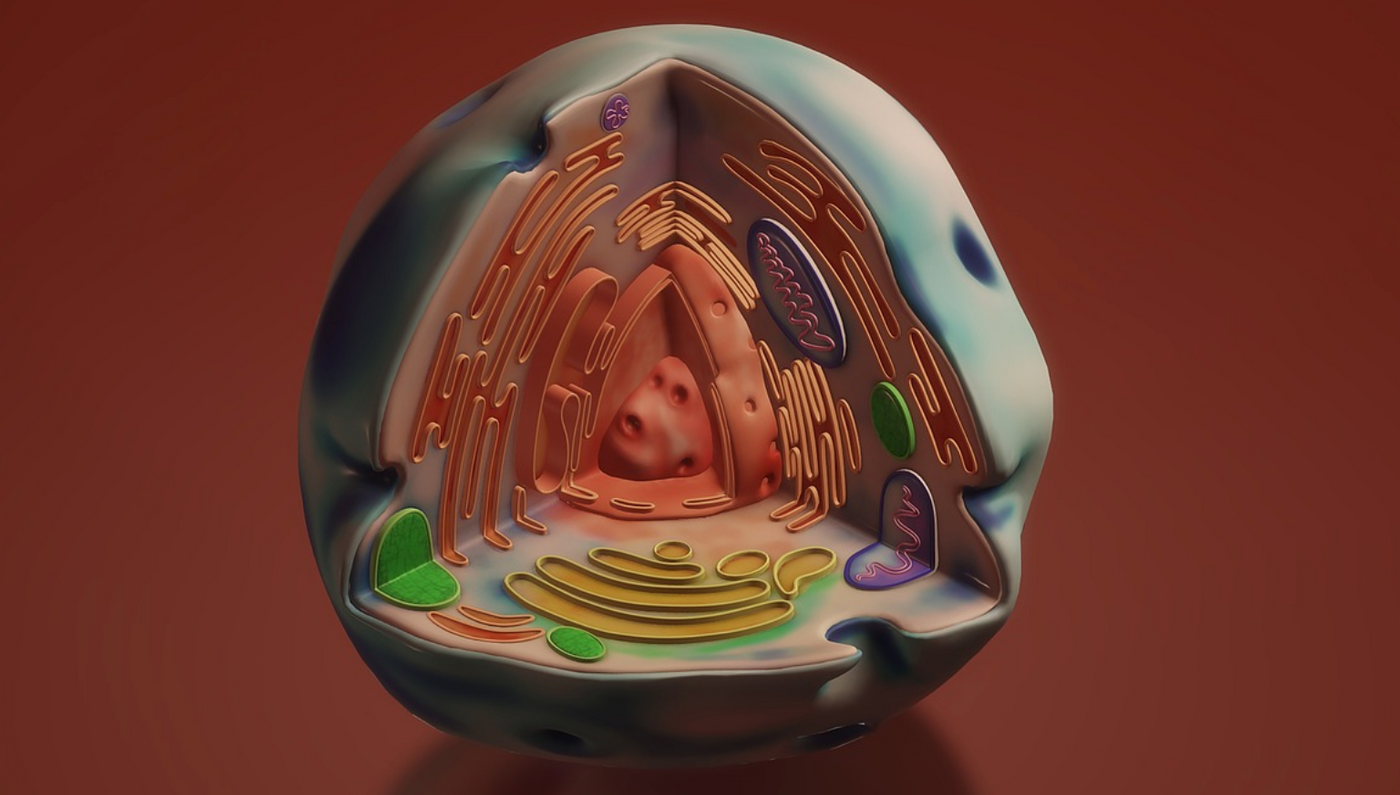
The tiny little powerhouses of our cells: mitochondria, are unique among organelles because they carry their own tiny little genomes. This genetic material is separate from the rest of our genomic DNA, which is stored in the nucleus of the cell. Mitochondrial DNA can also carry mutations that can have dramatic health effects, and lead to mitochondrial diseases. Now, scientists have identified a novel kind of mitochondrial DNA damage. The findings have been reported in the Proceedings of the National Academy of Sciences (PNAS).
Exposure to all sorts of things in the environment, from toxins to UV rays, can cause some damage to our DNA. But cells have ways to repair that damage. Mitochondrial DNA (mtDNA) can also be damaged. In this work, the researchers used human cells growing in culture to show that glutathionylated DNA (GSH-DNA) adducts are found at 80 times higher levels around mtDNA than nuclear DNA (nDNA). This could explain the higher rates of mutation in mtDNA compared to nDNA.
"mtDNA is more prone to damage than nDNA," explained senior study author Linlin Zhao, an associate professor of chemistry at the University of California–Riverside. "Each mitochondrion has many copies of mtDNA, which provides some backup protection. The repair systems for mtDNA are not as strong or efficient as those for nuclear DNA."
"When the engine's manual—the mtDNA gets damaged, it's not always by a spelling mistake: a mutation," added first study author Yu Hsuan Chen, a graduate student in the Zhao lab,. "Sometimes, it's more like a sticky note that gets stuck to the pages, making it hard to read and use. That's what these GSH-DNA adducts are doing."
The scientists saw that as these ‘sticky’ lesions built up in mtDNA, the function of mitochondria began to degrade. There was an increase in the production of proteins that respond to stress and aid in the repair of mitochondria, while energy generation proteins decreased.
A computer model indicated that the mtDNA becomes more rigid as “sticky tags” build up, said Chen, “and this could mark damaged DNA for elimination."
Zhao noted that these findings could open up new research questions into how mtDNA damage may be a cellular stress signal.
"Problems with mitochondria and inflammation linked to damaged mtDNA have been connected to diseases such as neurodegeneration and diabetes," said Zhao. "When mtDNA is damaged, it can escape from the mitochondria and trigger immune and inflammatory responses. The new type of mtDNA modification we've discovered could open new research directions to understand how it influences immune activity and inflammation."
Experienced research scientist and technical expert with authorships on over 30 peer-reviewed publications, traveler to over 70 countries, published photographer and internationally-exhibited painter, volunteer trained in disaster-response, CPR and DV counseling.