Our webinars allow users to learn from experts and earn continuing education credits on industry topics, progress in research, services available, and more.
Date: May 13, 2021 Time: 11:00am PST Dr. Dattwyler will share his extensive experience on the clinical diagnosis and treatment of Lyme disease including a brief history of Lyme Disease and h...
Date: May 13, 2021 Time: 9:00am PDT The value proposition for laboratory medicine has long been theorized, estimated and debated. Despite decades of effort and intangible proof, the strategi...
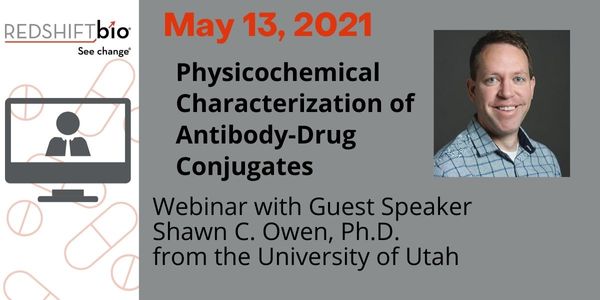
Date: May 13, 2021 Time: 8:00am (PDT), 11:00am (EDT) Antibodies are the most rapidly growing form of therapeutic. High-throughput methods of characterization are essential as companies and r...
Date: May 11, 2021 Time: 10:00zm PDT Your samples are some of the most valuable assets in the laboratory. After spending countless hours on extraction and preparation, your conclusions could...
DATE: May 11, 2021 TIME: 8:00am PDT T cells are most important from basic research to therapeutic approaches and play a pivotal role in many diverse application fields such as basic immu...
Date: May 6, 2021 Time: 9:00am (PDT), 12:00pm (EDT) The goal of this educational webinar is to introduce the audience to induced pluripotent stem cells (iPSCs) and the ways in which they are...
Date: May 6, 2021 Time: 7:00am PDT, 10:00am EDT, 4:00pm CEST Eukaryotic cell cultures respond to the most subtle influence. Apart from the risk of contamination, minimal changes in cultivati...
The increase in the number and diversity of drugs of abuse is a major concern; it also presents significant challenges for forensic laboratories who are involved in the analysis of seized su...
This talk will start with an introduction to a number of illicit benzodiazepines that have appeared in North East England over the last couple of years. This will be followed by an overview...
The success in the solving cases is based upon a system that emphasizes teamwork, from scene; recognition, collection, preservation, to laboratory; examination, identification , individualiz...
Date: May 5, 2021 Time: 8:00am PDT, 11:00am EDT Emergence of genetic mutations within the SARS-CoV-2 genome that may enhance transmissibility, increase symptom severity or improve the virus...
Genealogist have long supported the legal system through probate work, heir searching, and by identifying next-of-kin of servicemen. Even though DNA was first introduced to genealogists over...
The increasing use of prescription and non-medical prescription opioids has created a significant public health crisis. The rising rate of opioid-related deaths across North America has led...
In this session, a review of the impact of COVID-19 on the Forensic Science Program at the University of Toronto will be explored. Challenges for both undergraduate and graduate education wi...
The postmortem microbiome is an emerging field in forensic science with broad application for death investigation (e.g., time since death). While the foundation for forensic microbiology beg...
When violent crimes are committed, the crime scene is usually covered with blood. Blood may be shed when the person is standing, sitting, or on the ground. The weapon that caused blood to be...
Every day in America nearly seven thousand people die. That’s about two and a half million deaths per year. When a death is violent, unexpected, medically unattended, or suspicious &nd...
The detection and analysis of traces for the purpose of providing clues in criminal investigations has a rich history that dates back to the mid-18th Century. Traces are remnants of past eve...
Short tandem repeats (STRs) are gold-standard genetic loci used for source attribution of evidentiary material in legal matters. Their power lies in their high heterozygosity and large allel...
Research on decomposition odor has evolved significantly since the first introduction of this concept in the literature in 2004. This work is foundational to understanding several areas of f...
In examining the potential adoption of the Oncomine Precision Assay, University of Texas Health had several criteria to consider, including the need for highly accurate detection of small sa...
Cancer is among the leading causes of death worldwide. In 2018, there were 18.1 million new cases and 9.5 million cancer-related deaths worldwide. With the advancement of next generation seq...
Thermo Fisher Scientific have spearheaded the development and democratization of next-generation sequencing, a technology that has fueled research in precision oncology and will play a key p...